
CX/Gravel Tire Test: Specialized Tracer TLR 40
Contents and Test Summary
- Introduction
- Manufacturer Specifications
- Size, Weight, Thickness
- Rolling Resistance: 21.1 Watts
- Puncture Resistance: 28 Points
- Static Wet Grip: 70 Points
- Conclusion: 3.8 / 5 Recommended
- Comments
- Specialized Tracer TLR 40
(100% is best)
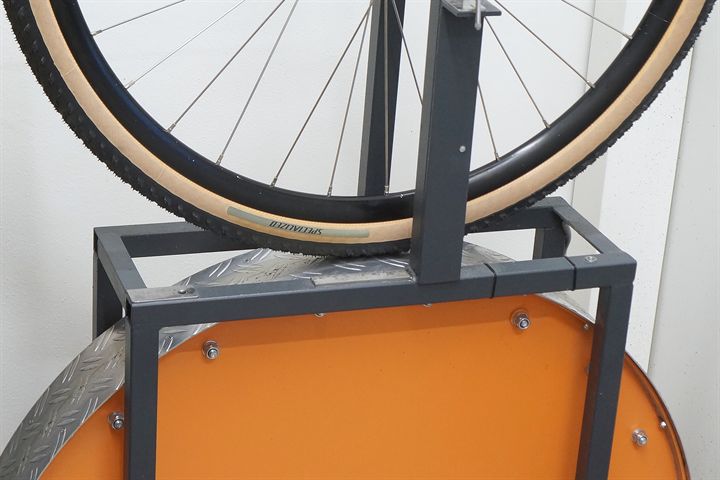
Specialized has recently revamped almost its entire tire lineup, and the do-it-all Tracer also received a huge update. The Tracer's tread pattern is as versatile as can be and should be a good choice for almost all gravel bike conditions except for those conditions where you need the absolute maximum amount of off-road grip. We can also see this tire working well when mixed front/rear with the Specialized Pathfinder or Terra TLR.
We can already tell you that the new Specialized gravel tires are completely different, with all the important aspects changed: casing, compound, and tread pattern. This is unsurprising since these tires now come from a different factory in another country. We already tested a similar construction Pathfinder TLR in both the 40 and 45 mm sizes, and weren't fully convinced the new construction was an improvement.
The Tracer TLR comes with a 60 TPI casing, and it's important to note a significant change when compared to the old Tracer Pro 2Bliss Ready: the BlackBelt anti-puncture strip has been removed. Removing the layer of Blackbelt looks to have resulted in quite a significant weight saving, as the specified weight of the 40 mm Tracer TLR is now 460 grams, while the old 42 mm Tracer Pro 2Bliss Ready came in at 525 grams.
The compound is Specialized's Gripton T5, the fastest version of their Gripton compound available today. The original Gripton compound was one of the best available at the time of its release, around 2016. While it was still competitive, the new Gripton T5, T7, and T9 compounds probably offer better specialized performance.
The tread pattern has also been revised, giving the Tracer TLR a much more modern look. Also new is that the standard sidewall color is now tan instead of black. As far as we can see, only the 700x45 size is available in either black or tan sidewall versions, while the 40 and 50 mm sizes are available only with tan sidewalls.
We've tested the 40 mm version of the new Tracer TLR and will compare it to the new 40 mm Pathfinder TLR (read our review) and a wide range of similar tires from competing brands.
Manufacturer Specifications
| Manufacturer Specs | |
|---|---|
| Brand | Specialized |
| Model | Tracer TLR |
| Year | 2026 |
| Supplied By | Bought in store |
| New or Used | New |
| Mileage | 0 km |
| Price Range | High |
| Buy At | |
| Manufacturer part number | 00025-4341 |
| EAN | 19662520798 |
| TPI | 60 |
| Compound | Gripton T5 |
| Bead | Folding |
| ETRTO | 40-622 |
| Specified Weight | 460 grams |
| Max Air Pressure (psi) | 65 |
| Made In | Pro Data |
| Available Sizes |
40-622 (700x40c) 45-622 (700x45c) 50-622 (700x50c) |
Specialized Tracer TLR 40 Test Results
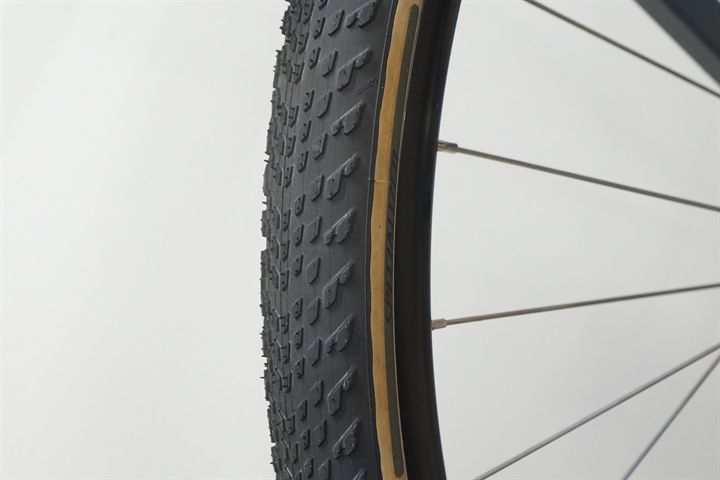
Size, Weight, and Thickness Measurements
| Size, Weight, and Thickness Measurements | |
|---|---|
| Specified Weight | 460 grams |
| Measured Weight | 426 grams |
| Measured Width Casing | 38 mm (un-round) |
| Measured Width Tread | 39 mm |
| Measured Height | Pro Data |
| Tire Circumference | Pro Data |
| Measured Knob Height Center | 1.3 mm |
| Measured Knob Height Edge | 2.1 mm |
| Measured Total Thickness Center (excluding knobs) | 2.20 mm |
| Measured Total Thickness Sidewall | Pro Data |
| All size measurements are taken at low air pressure on a 17.8 mm inner width rim. | |
Rolling Resistance Test Results
| Rolling Resistance Test Results | |
|---|---|
| Inner Tube | None (30 ml sealant) |
| Measured Width | 38 mm |
| Rolling Resistance Real tire width in mm: 30-32 = 66 psi/4.6 bar 33-35 = 60 psi/4.1 bar 36-38 = 54 psi/3.7 bar 39-42 = 50 psi/3.4 bar 43-46 = 46 psi/3.2 bar 47-50 = 42 psi/2.9 barHigh Air Pressure (54 psi / 3.7 bar) |
Pro Data |
| Rolling Resistance Real tire width in mm: 30-32 = 55 psi/3.8 bar 33-35 = 50 psi/3.4 bar 36-38 = 45 psi/3.1 bar 39-42 = 42 psi/2.9 bar 43-46 = 38 psi/2.6 bar 47-50 = 35 psi/2.4 barMedium Air Pressure (45 psi / 3.1 bar) |
Pro Data |
| Rolling Resistance Real tire width in mm: 30-32 = 44 psi/3.0 bar 33-35 = 40 psi/2.8 bar 36-38 = 36 psi/2.6 bar 39-42 = 33 psi/2.3 bar 43-46 = 31 psi/2.1 bar 47-50 = 28 psi/1.9 barLow Air Pressure (36 psi / 2.6 bar) |
21.1 Watts CRR: 0.00632 |
| Rolling Resistance Real tire width in mm: 30-32 = 33 psi/2.3 bar 33-35 = 30 psi/2.1 bar 36-38 = 27 psi/1.9 bar 39-42 = 25 psi/1.7 bar 43-46 = 23 psi/1.6 bar 47-50 = 21 psi/1.4 barExtra Low Air Pressure (27 psi / 1.9 bar) |
Pro Data |
| The CX/Gravel section is a multi tire size section, air pressures have been adjusted to the measured casing width. All numbers are for a single tire at a speed of 29 km/h / 18 mph and a load of 42.5 kg / 94 lbs. Use the formula: RR (Watts) = CRR * speed (m/s) * load (N) to calculate rolling resistance at a given speed and load. |
|
Puncture Resistance Test Results
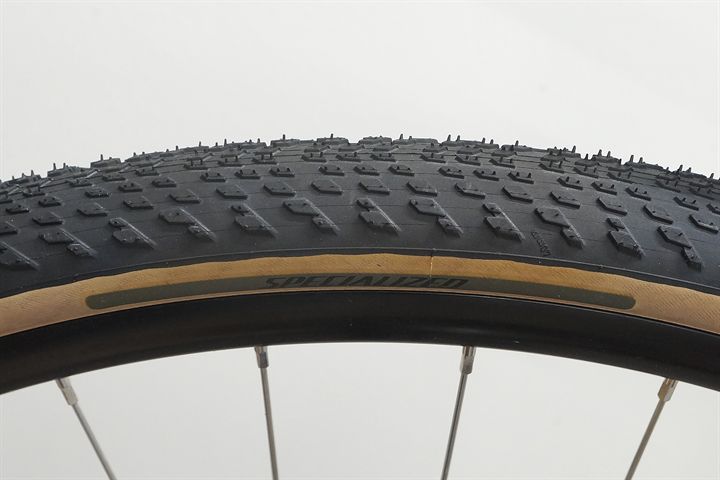
| Puncture Resistance Test Results (higher is better) | |
|---|---|
| Total Puncture Score Tread | 28 Points |
| Total Puncture Score Sidewall | Pro Data |
| Tread Puncture Force Sharp Needle | Pro Data |
| Tread Puncture Force Blunt Needle | Pro Data |
| Tread Total Tire Thickness | 2.20 mm |
| Sidewall Puncture Force Sharp Needle | Pro Data |
| Sidewall Puncture Force Blunt Needle | Pro Data |
| Sidewall Total Tire Thickness | Pro Data |
Hard Surface Static Grip Test Results
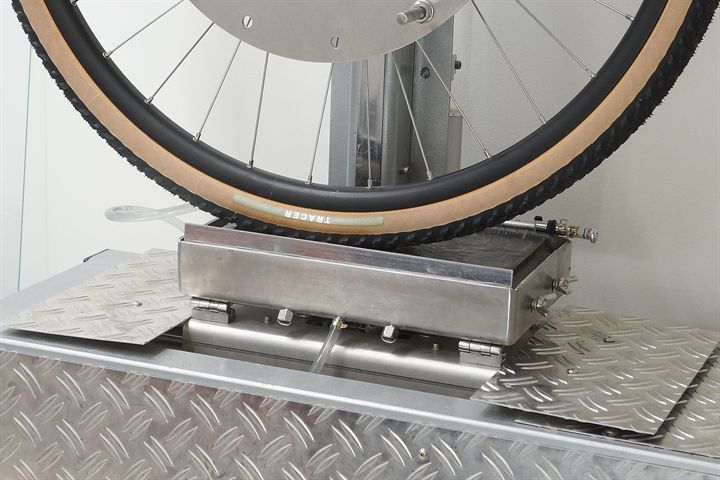
| Static Grip Test Results | |
|---|---|
| Wet Grip Average | 70 Points |
| Wet Grip Center | Pro Data |
| Wet Grip Edge | Pro Data |
| Measured Knob Height Center | 1.3 mm |
| Measured Knob Height Edge | 2.1 mm |
| Grip in points = coefficient of friction * 100 CX/Gravel grip test rim width = 23.0 mm |
|
| Wet Grip Test and Off-Road Tires (info) | |
Conclusion
- Specialized Tracer TLR 40
(100% is fastest - lightest - highest - strongest)
The Specialized Tracer TLR is an average-performing tire that ends up in the middle of the pack in most of our tests. The main weakness is the puncture resistance of both the tread and sidewalls, and we consider that an important aspect, especially given that Specialized dropped the BlackBelt anti-puncture layer on the new Tracer TLR. If you were used to the old Tracer Pro 2Bliss Ready, this can be a big deal.
When compared to the competition, we see many tires from other brands that perform better in our tests. We only recommend the Tracer TLR if you already own Specialized equipment and want to go all-in on Specialized.
Compare the Specialized Tracer TLR and Pathfinder TLR on our comparison section.
RATING:
3.8
/ 5
TEST VERDICT:
Recommended