
CX/Gravel Tire Test: Silca Protocol RCG-3 45
Contents and Test Summary
- Introduction
- Manufacturer Specifications
- Size, Weight, Thickness
- Rolling Resistance: 19.8 Watts
- Puncture Resistance: 45 Points
- Static Wet Grip: 64 Points
- Conclusion: 4.0 / 5 Recommended
- Comments
- Silca Protocol RCG-3 45
(100% is best)
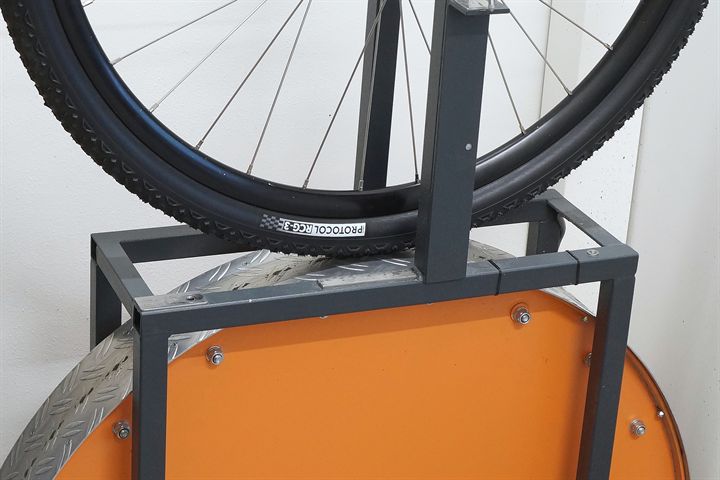
After our positive review of Silca's Protocol RCG-1 last month, we're now testing the Protocol RCG-3, which features a different tread pattern and a more puncture-resistant casing. Silca describes the Protocol RCG-3 as "the fastest tire that won't flat" and "engineered for harsh courses and unpredictable terrain".
We're a bit surprised by the extra protection, as RCG stands for "Race Casing Gravel," and we assumed the RCG-1, RCG-3, and RCG-4 all use the same casing design. We dug further into the specifications, and the RCG-3 has an additional layer of protection under the tread, while the RCG-4 even has a full bead-to-bead protective layer, which means these tires are more different than we expected.
Most manufacturers offer their tire lineup with the same casing design, and then offer additional "Protection" versions for those that prefer more protection. With the RCG range being Silca's first entry into the tire market, it looks like they made this choice to limit the number of tires they had to release. As long as you're aware you're not only getting a rougher tread but also more protection, it's probably not an issue for most.
The Pulsar Compound remains unchanged, and that's a good thing, as a big part of the performance of the Protocol RCG-1 (and Protocol RCR 29), both of which performed strongly in our tests, comes from the compound.
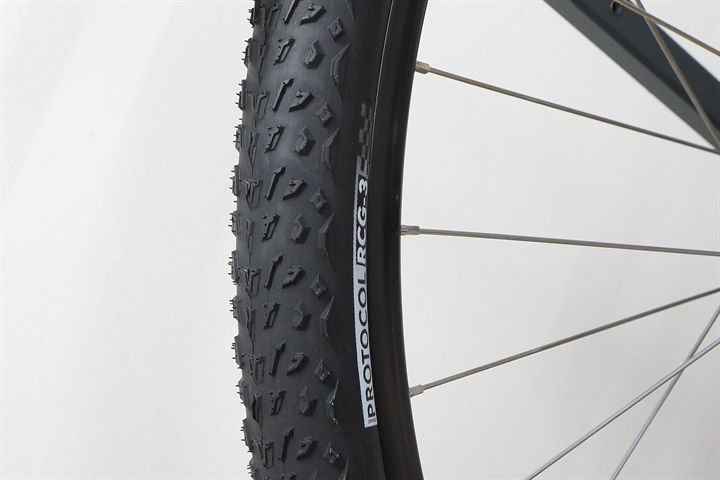
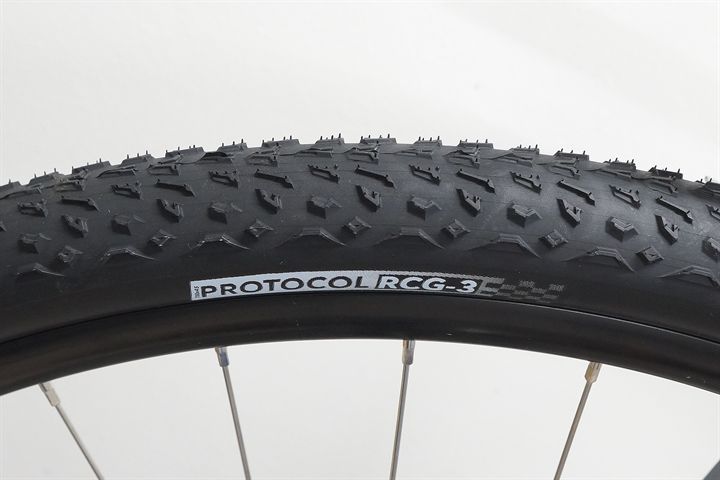
The biggest visual change comes from the tread pattern, which should provide better overall performance at the cost of speed. Be aware, though, that the knob height on the RCG-3 is still quite limited, and we're unsure the edge grip will be better than the RCG-1 due to the limited knob height. If you need more off-road grip, the Protocol RCG-4 looks like a good upgrade over the Protocol RCG-1 and RCG-3.
Like the RCG-1 (and RCG-4), the RCG-3 is available in 700x45c, 700x50c, and 700x55c sizes, which we reckon have quickly become the most popular gravel bike tire sizes. We've tested the 45 mm Protocol RCG-3 and compared it with the 45 mm Protocol RCG-1, a range of similar 44/45 mm gravel bike tires, and the 40 mm Hutchinson Touareg Race TLR, 40 mm Pirelli Gravel H SmartEvo GR, and 50 mm Continental Dubnital Race Rapid because of their best-in-class performance.
Manufacturer Specifications
| Manufacturer Specs | |
|---|---|
| Brand | Silca |
| Model | Protocol RCG-3 |
| Year | 2026 |
| Supplied By | Bought in store |
| New or Used | New |
| Mileage | 0 km |
| Price Range | Very High |
| Buy At | |
| Manufacturer part number | - |
| EAN | 810093163311 |
| TPI | 120 |
| Compound | Pulsar Compound |
| Bead | Folding |
| ETRTO | 45-622 |
| Specified Weight | 495 grams |
| Max Air Pressure (psi) | 50 |
| Made In | Pro Data |
| Available Sizes |
45-622 (700x45c) 50-622 (700x50c) 55-622 (700x55c) |
Silca Protocol RCG-3 45 Test Results
Size, Weight, and Thickness Measurements
| Size, Weight, and Thickness Measurements | |
|---|---|
| Specified Weight | 495 grams |
| Measured Weight | 475 grams |
| Measured Width Casing | 43 mm (un-round) |
| Measured Width Tread | 45 mm |
| Measured Height | Pro Data |
| Tire Circumference | Pro Data |
| Measured Knob Height Center | 1.4 mm |
| Measured Knob Height Edge | 2.2 mm |
| Measured Total Thickness Center (excluding knobs) | 2.50 mm |
| Measured Total Thickness Sidewall | Pro Data |
| All size measurements are taken at low air pressure on a 17.8 mm inner width rim. | |
Rolling Resistance Test Results
| Rolling Resistance Test Results | |
|---|---|
| Inner Tube | None (30 ml sealant) |
| Measured Width | 43 mm |
| Rolling Resistance Real tire width in mm: 30-32 = 66 psi/4.6 bar 33-35 = 60 psi/4.1 bar 36-38 = 54 psi/3.7 bar 39-42 = 50 psi/3.4 bar 43-46 = 46 psi/3.2 bar 47-50 = 42 psi/2.9 barHigh Air Pressure (46 psi / 3.2 bar) |
Pro Data |
| Rolling Resistance Real tire width in mm: 30-32 = 55 psi/3.8 bar 33-35 = 50 psi/3.4 bar 36-38 = 45 psi/3.1 bar 39-42 = 42 psi/2.9 bar 43-46 = 38 psi/2.6 bar 47-50 = 35 psi/2.4 barMedium Air Pressure (38 psi / 2.6 bar) |
Pro Data |
| Rolling Resistance Real tire width in mm: 30-32 = 44 psi/3.0 bar 33-35 = 40 psi/2.8 bar 36-38 = 36 psi/2.6 bar 39-42 = 33 psi/2.3 bar 43-46 = 31 psi/2.1 bar 47-50 = 28 psi/1.9 barLow Air Pressure (31 psi / 2.1 bar) |
19.8 Watts CRR: 0.00594 |
| Rolling Resistance Real tire width in mm: 30-32 = 33 psi/2.3 bar 33-35 = 30 psi/2.1 bar 36-38 = 27 psi/1.9 bar 39-42 = 25 psi/1.7 bar 43-46 = 23 psi/1.6 bar 47-50 = 21 psi/1.4 barExtra Low Air Pressure (23 psi / 1.6 bar) |
Pro Data |
| The CX/Gravel section is a multi tire size section, air pressures have been adjusted to the measured casing width. All numbers are for a single tire at a speed of 29 km/h / 18 mph and a load of 42.5 kg / 94 lbs. Use the formula: RR (Watts) = CRR * speed (m/s) * load (N) to calculate rolling resistance at a given speed and load. |
|
Puncture Resistance Test Results
| Puncture Resistance Test Results (higher is better) | |
|---|---|
| Total Puncture Score Tread | 45 Points |
| Total Puncture Score Sidewall | Pro Data |
| Tread Puncture Force Sharp Needle | Pro Data |
| Tread Puncture Force Blunt Needle | Pro Data |
| Tread Total Tire Thickness | 2.50 mm |
| Sidewall Puncture Force Sharp Needle | Pro Data |
| Sidewall Puncture Force Blunt Needle | Pro Data |
| Sidewall Total Tire Thickness | Pro Data |
Hard Surface Static Grip Test Results
| Static Grip Test Results | |
|---|---|
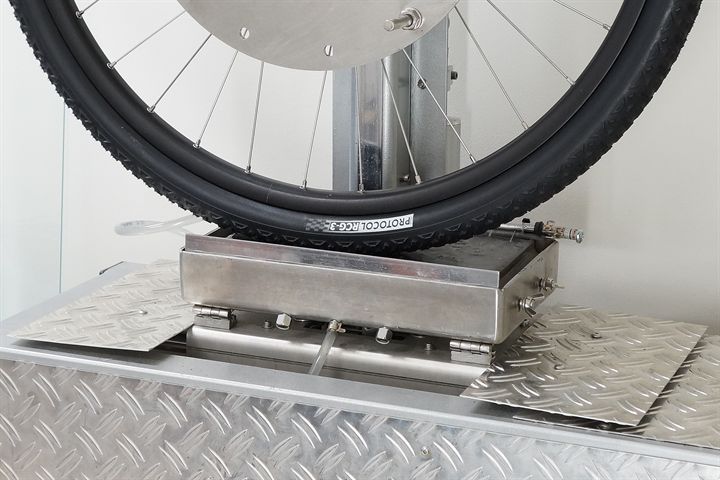
| Wet Grip Average | 64 Points |
| Wet Grip Center | Pro Data |
| Wet Grip Edge | Pro Data |
| Measured Knob Height Center | 1.4 mm |
| Measured Knob Height Edge | 2.2 mm |
| Grip in points = coefficient of friction * 100 CX/Gravel grip test rim width = 23.0 mm |
|
| Wet Grip Test and Off-Road Tires (info) | |
Conclusion
- Silca Protocol RCG-3 45
(100% is fastest - lightest - highest - strongest)
Silca's Protocol RCG-3 isn't as light or as fast-rolling as its Protocol RCG-1, mostly because of the extra protective layer under the tread. This protective layer obviously results in a better tread puncture resistance score, which increased from 34 points to 45 points (a 32% increase). The tread pattern is also more similar than we expected, there's even a regression of edge knob height on the RCG-3.
While we gave the Protocol RCG-1 a rave review for its lightness, low rolling resistance, and strong overall performance, we can't find an area where the Protocol RCG-3 would beat the competition. When we compare it to the competition, too many tires roll faster and come close to or exceed the Protocol RCG-3 in our other tests.
If you’re looking for an all-round gravel tire with no large shortcomings, the Protocol RCG-3 might be a good bet.
Compare the Silca Protocol RCG-1 and RCG-3 on our comparison section.
RATING:
4.0
/ 5
TEST VERDICT:
Recommended